


I’d been meaning to get to the National Football Museum for years, finally making it on a Saturday in August. It is located in the Urbis building, which is the big glass wedge in Cathedral Gardens in the middle of Manchester. It’s the kind of place that you can visit once and keep going back to, never running out of things to look at. Here’s how my day went and what I’d tell anyone planning a trip.
Getting There
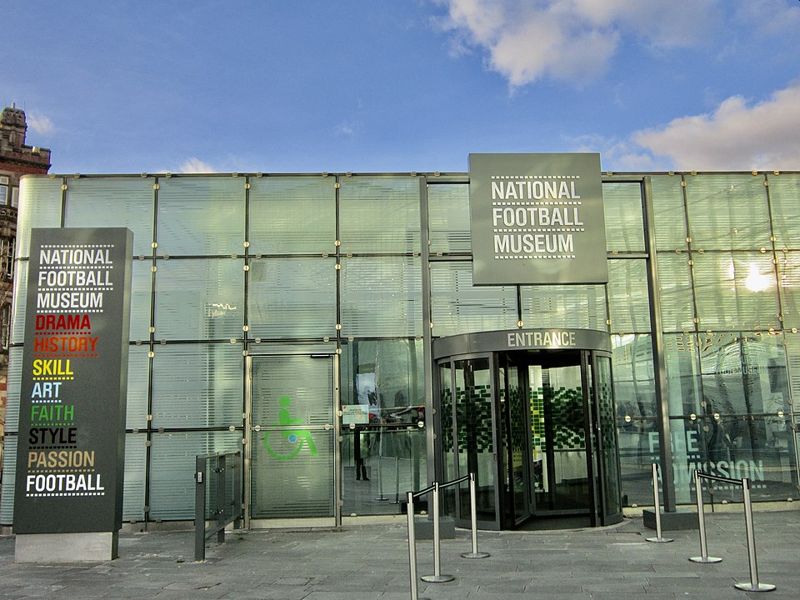
The museum says it’s two minutes from Manchester Victoria, which is probably about right. I came into the city on the train, walked out of the station and could see the building straight away. Trams and buses stop nearby too, so there’s little reason to drive unless you have a personal need for a vehicle.
If you do bring the car, the museum points people to the AO Arena, Printworks and Deansgate North car parks as somewhere to park up during your visit. Because I have Multiple Sclerosis, I sometimes have days when walking is harder than other times, so I tend to work out which one leaves me the shortest walk before I set off. Whatever you do, though, I’d recommend that you travel light. There’s no luggage storage, so any bag you bring stays with you all the way round.
Tickets and Prices
I bought my ticket online the night before and paid £16. Turning up on the day would have cost me £18 for an adult, whilst a child’s ticket is £10 in advance or £12 on the door. Under-fives go free, and there’s a family ticket as well, if you’re heading along with a number of people in your party of varying ages.
The best part of it all is that every ticket bought directly from the museum works as a season ticket for 12 months from your first visit, allowing you to head back at your leisure during the following year. I’ve already been back once to see the bits that I rushed the first time around. Also, if you live in the City of Manchester itself, you don’t pay at all, provided you bring photo ID and proof of address. Disabled visitors can bring one carer in free of charge.
What’s on Each Floor
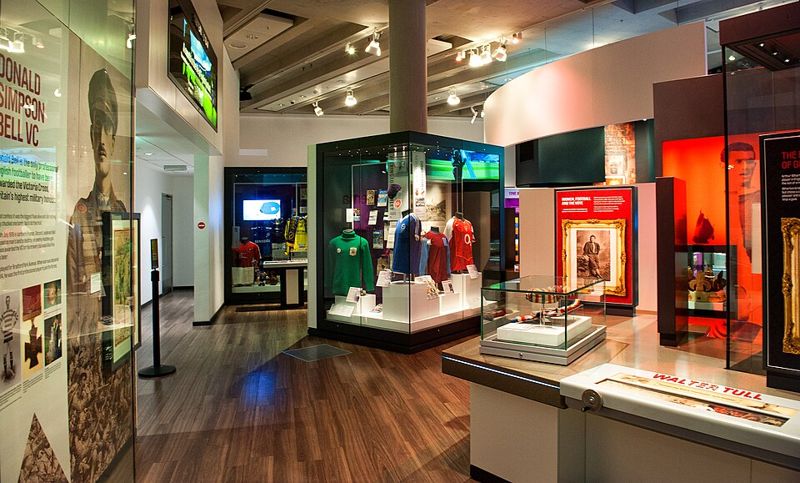
The museum is built over four levels, so I started at the bottom. The ground floor is called the Pitch Gallery and it has replica trophies that you can pose with and, for some reason I still can’t explain, George Best’s Mini Cooper. The Hall of Fame names are listed here too.
Level 1 is where the real treasures are, though. I stood in front of the original 1863 Laws of the Game for longer than I’d like to admit, wondering which ones referees had chosen to ignore when officiating my team. After that, I moved on to the oldest surviving FA Cup trophy and the statue of Lily Parr, who was one of the great early stars of the women’s game. If you only see one floor properly, make it this one.
Level 2 is the Play Gallery, which is noisy in a way that you’ll either find annoying or endearing, depending on if you’ve got children. Kids were queuing for the passing and goalkeeping games, and a few grown men (me included) weren’t far behind.
Level 3 holds the temporary exhibition, which obviously changes on a regular basis. When I went, it was Head, Shoulders, Knees and Goals, which was a hands-on look at football and the human body.
The Penalty Shootout
The penalty shootout on Level 2 costs £3 a go on top of your ticket, with the museum warning that the queue can go past 30 minutes when the place is busy. On a Saturday afternoon in the school holidays, for example, I waited about 20 minutes, which was definitely worth it.
My tip is to head straight up there when you arrive if you’re determined to have a go, given that that will be before the families filter up from the lower floors. I scored one out of three, and I’m blaming the ‘keeper for the two misses.
Accessibility

This is where the museum really impressed me. There are lifts to every floor, automatic doors at the entrance and accessible toilets on several levels. Wheelchairs can be borrowed for free if you’re with someone who doesn’t always need one but could do with the help, though it’s worth booking one ahead in that instance. I didn’t need one, but I used the lifts all afternoon and never had to wait for very long.
Plan a sit-down into your visit if you tire easily. The Dugout Café on the ground floor is open from 10am until 4pm, but it only takes cards, which caught the person in front of me out.
How Long You’ll Need
The museum suggests about 90 minutes for your visit. I was there for closer to two and a half hours, but I read nearly everything and stopped for a hot chocolate. With young children who mainly want the games, 90 minutes is probably more realistic and they may well get bored if you’re there for any longer.
It’s open every day from 10am until 5pm, with the last entry being 4pm. Understandably, it closes on Christmas Eve, Christmas Day and New Year’s Day. Get there for opening if you can and want to get through the exhibits as quickly as possible. By lunchtime, it was noticeably busier and so I was glad I’d done Level 1 whilst it was quiet.


