
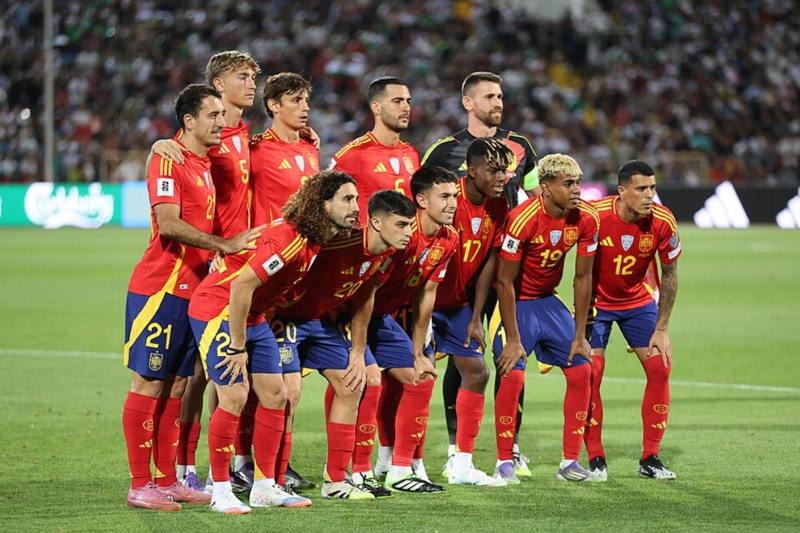
Spain Have Won Everything There Is to Win in Football. Here Is Why That Is No Accident.

The FIFA World Cup 2026 was met with considerable skepticism before a ball was kicked. Plenty of football experts and fans questioned the expanded 48-team format, the decision to spread matches across three host nations, and whether the organizational complexity would undermine the tournament’s prestige.
Friedel’s World Cup outlook captured those early concerns well, including genuine worry that stadiums would sit half-empty during group stage matches involving nations with limited travelling support.
But none of it proved true. The tournament delivered on every level: record attendances, electric atmospheres, and football of the highest quality. And at the center of it all, Spain stood alone. La Roja beat Argentina 1-0 in the final in New Jersey to become world champions once again, confirming what anyone paying attention already knew: this is the most complete footballing nation on the planet right now.
A Record That Puts Everything in Perspective
Sixteen major titles at world and European level across men’s and women’s football in just five years. That number alone tells a story that no individual highlight reel can fully capture. Spain are currently the only nation in history to hold the men’s and women’s World Cup simultaneously, a distinction that would have seemed like fiction a decade ago.
The men claimed the Nations League in 2023, gold at the 2024 Olympics, the European Championship in 2024, and now the World Cup in 2026. The women, meanwhile, won the World Cup in 2023 and back-to-back Nations League titles in 2024 and 2025.
What makes these numbers even more striking is that they stretch beyond the senior game. Spain have collected titles at under-17, under-19, under-21, and Olympic level consistently over the same period. This is not a nation riding one golden generation. It is a system producing excellence at every age group, year after year, without interruption. That kind of sustained output does not happen by chance.
The Coaching Decision That Changed Everything

When Spain appointed Luis de la Fuente as senior head coach in December 2022, the reaction was far from enthusiastic. Spain had just been knocked out of the Qatar World Cup at the last-16 stage by Morocco on penalties. The federation needed a fresh direction, and they chose a man who had never managed a top-flight club.
De la Fuente had spent his post-playing career working through the lower divisions of Spanish football, moving into youth coaching roles, and eventually leading Spain’s under-19s, under-21s, and Olympic team.
That background turned out to be precisely what Spain needed. De la Fuente knew most of these players before they became stars. He had coached Lamine Yamal, Pau Cubarsi, and others through the youth system, building relationships and embedding a clear footballing identity long before they pulled on the senior shirt.
His approach is built on patience, tactical discipline, and an unwavering belief in the collective over the individual. Since taking charge, Spain have gone unbeaten in their last 38 competitive matches, the longest unbeaten run in the history of any European or South American national team.
The Young Players Carrying Spain Forward
Lamine Yamal picked up his first World Cup winners’ medal at 19 years old. Pau Cubarsi started the final against Argentina at the same age.
Spain became the first nation in history to feature two teenagers in a World Cup final, and both of them were not just passengers; they were key figures. Yamal, in particular, has developed into one of the most dangerous attacking players in world football, capable of deciding matches on his own and doing so with a composure that most players twice his age cannot replicate.
The women’s side has its own next generation ready. Vicky Lopez is a three-time Champions League winner with Barcelona at 19. Salma Paralluelo has over 50 senior caps before her 23rd birthday.
These are not just talented youngsters; they are battle-hardened players who have already won the biggest trophies in the game. That experience at a young age creates a compound effect. Winning becomes familiar, expectation becomes motivation, and the culture of success gets passed down through every squad.
A System Built to Last
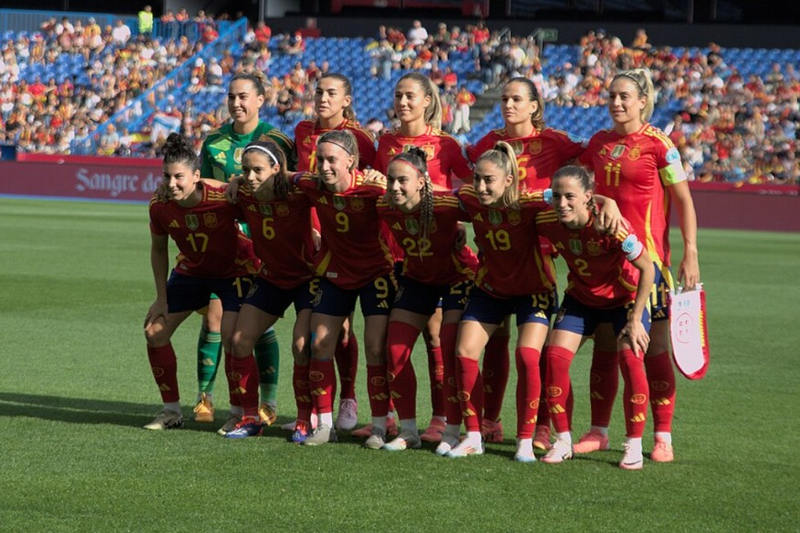
Spain’s dominance goes well beyond tactics or individual talent. It is structural. The investment in women’s football over the last decade has been transformative.
Facilities, academies, funding, and professional contracts for female players have all improved dramatically. A generation of women who grew up paying their own travel costs to training are now coaching, mentoring, and inspiring the players who are winning World Cups. The pipeline runs deep and it keeps producing.
On the men’s side, the influence of Spanish football culture has spread across Europe’s biggest clubs and leagues. Spanish coaches are now leading Premier League clubs in significant numbers, exporting ideas and methods rooted in the same footballing philosophy that powers the national teams. La Masia at Barcelona, the academy structures at Real Madrid and Atletico, and the development environments at clubs across Spain are all contributing to a national identity that is coherent, consistent, and continuously evolving.
Why the Dominance Will Continue
After the final whistle in New Jersey, players reportedly asked De la Fuente what was left to win. His answer was characteristically grounded: the next match in September.
That mentality (refusing to rest, treating every achievement as the starting point for the next one) is the clearest explanation for why Spain keep winning when it matters most.
No team at this World Cup laid a meaningful glove on them. Spain conceded just ten shots on target across the entire tournament. That defensive solidity, combined with an attacking fluency built around quick passing, intelligent movement, and fearless pressing, makes them extraordinarily difficult to break down or outplay. As it stands, no nation has found a reliable answer to it.
Spain have won everything there is to win. But the most telling thing about this squad (from the senior men and women down through every youth category) is that they show no signs of being satisfied with what they have already achieved. That hunger, embedded in the system and shared across every level of the game, is what separates them. Talent produces champions. Culture produces dynasties.


